Best Ultralight Backpack: Weights, Volumes, Prices
The Granite Gear Crown3 60L ($195.96, 2 lb 3 oz or 992 g) is the best ultralight backpack for most hikers because the removable framesheet and lid let one pack cover both a loaded five day carry and a stripped weekend. Frameless and lightly framed packs carry badly above roughly 25 lb total, so bring base weight down before buying one.
A backpack is the only item in your kit whose job is to carry everything else, which is why it is the one you should buy last. The Granite Gear Crown3 60L at $195.96 and a listed 2 lb 3 oz, which is 35 oz or 992 g, is the pick for most hikers, because the framesheet and the lid both come out and the same pack handles a five day food carry and a stripped overnight.
Below are five packs from $129.99 to roughly $400, and then the one number that decides which of them you can actually use: your base weight. Buy above your load and you carry frame you do not need. Buy below it and the pack becomes worse than a cheap one.
Best ultralight backpacks by experience level

Naturehike Rock 2.0 60L Internal Frame Pack
A framed 60 litre pack for roughly a third of what the name brands charge. It is heavier than anything else on this page, and it is also the pack that lets you spend the money on a quilt instead.
Best for: A first season, or anyone who wants to find out whether they like this before spending $300 on a pack.
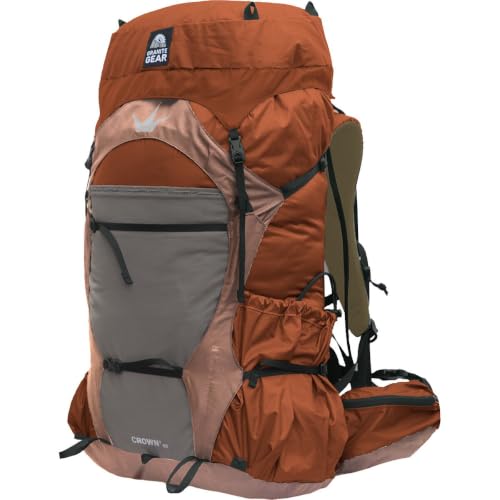
Granite Gear Crown3 60L Backpack
The removable framesheet and lid mean one pack covers a loaded five day carry and a stripped weekend at under two pounds. Very few packs at this price adjust that far in both directions.
Best for: The second pack, when you know your base weight but it still moves season to season.
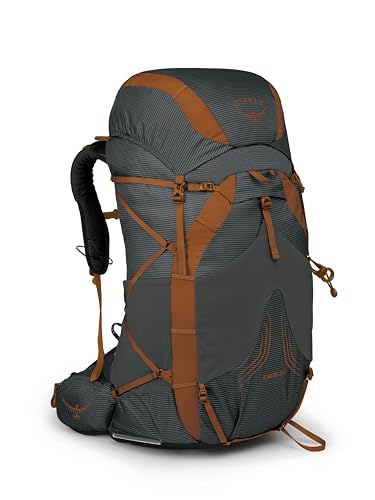
Osprey Exos 58 Ultralight Backpacking Pack
The trampoline back panel is still the best answer to a sweat-soaked back in the humid east, and Osprey covers it under their all-mighty guarantee. You pay for that in a few extra ounces of frame.
Best for: Humid summer hiking, and anyone who has never got on with a pack that sits flat against the spine.
Hyperlite Mountain Gear Southwest 55
Dyneema Composite Fabric, seam-taped, effectively waterproof, and the pack that made ultralight packs a mainstream category. It has no lid and very little structure, which is the trade.
Best for: A base weight already under about 14 lb. Overload a frameless or lightly framed pack and it carries worse than a cheap one.
Zpacks Arc Haul Ultra 60
An external carbon arc frame that keeps the pack off your back and still lands around 21 ounces. It is the lightest genuinely load-carrying pack most people will ever use.
Best for: Thru-hikers counting single ounces. Do not buy this as a first pack, the fit window is narrow.
Weights are the manufacturer's listed figures. Prices and stock change constantly, so confirm on the retailer page. We earn commissions from Backcountry and from qualifying Amazon purchases. Cottage gear sold direct earns us nothing and is listed anyway.
Why base weight decides the pack, not the other way around
Base weight is the weight of everything in and on your pack minus food, water and fuel, and the pack itself counts toward it. It is the number this whole category is organised around, because it is the part of your load that does not change with trip length.
Here is the rule that saves people the most money: frameless and lightly framed packs carry badly over roughly 25 lb, which is about 11.3 kg, of total load. Past that ceiling the weight stops transferring through the frame into your hips and starts hanging off your shoulders and lower back. A frameless pack at 30 lb is genuinely less comfortable than a $130 framed pack at 30 lb, and no amount of careful packing fixes it. That is why the ultralight packs at the bottom of this page carry a warning rather than a recommendation.
Work backwards from there with real numbers. A 25 lb ceiling, minus three days of food at 1.5 lb per day, minus two litres of water at 2.2 lb per litre, leaves you about 16 lb of base weight. Go to a five day carry and food alone is 7.5 lb, dropping the available base weight to roughly 13 lb. Desert trips where you carry four litres take another 4.4 lb off the top. The base weight calculator, the food weight calculator and the water carry calculator exist to make you do this arithmetic before you spend $400 on a pack that will not carry what you own.
The general guideline people quote is about 20 percent of body weight for a loaded pack and about 10 percent for base weight. For a 160 lb hiker that is 32 lb loaded and 16 lb base, which happens to land right on the frameless ceiling. Check yours against the pack weight to body weight calculator, and treat it as a sanity check rather than a law.
What does the frame actually do?
A pack frame is a rigid path from your shoulders to your hip belt. Without it, everything in the pack hangs from the shoulder straps. With it, most of the load is pushed down onto your pelvis, which is a far better structure for carrying weight than your shoulders are.
The packs here use four approaches. The Naturehike Rock 2.0 60L uses a conventional internal frame and pays for it in weight at 3 lb 5 oz, or 1,503 g. The Granite Gear Crown3 uses a removable framesheet, so you choose per trip. The Osprey Exos 58 uses a peripheral frame with a tensioned trampoline back panel, which keeps the pack off your spine and is still the best answer to a sweat soaked back in humid heat, at the cost of a few frame ounces. The Zpacks Arc Haul Ultra 60 uses an external carbon arc that does the same job at 1 lb 5 oz, or 595 g, which is remarkable and also narrow in its fit window.
Under about 15 lb of total load, the frame stops earning its weight and a hip belt stops doing much beyond keeping the pack from swaying. That is the crossover point where frameless packs start to make sense, and it is a much lower number than most people expect. Our frameless vs framed pack comparison walks through where the line sits for different loads.
How do these five packs compare?
| Pack | Price | Listed weight | Grams | Volume | Frame |
|---|---|---|---|---|---|
| Naturehike Rock 2.0 | $129.99 | 3 lb 5 oz | 1,503 g | 60 L | Internal frame |
| Granite Gear Crown3 | $195.96 | 2 lb 3 oz | 992 g | 60 L | Removable framesheet |
| Osprey Exos 58 | $280.00 | 2 lb 10 oz | 1,191 g | 58 L | Peripheral, trampoline back |
| Hyperlite Southwest 55 | About $400 | 2 lb 0 oz | 907 g | 55 L | Minimal internal frame |
| Zpacks Arc Haul Ultra 60 | About $400 | 1 lb 5 oz | 595 g | 60 L | External carbon arc |
The interesting comparison is the last two rows. Both cost about $400 and both are cottage packs sold direct only, and they solve different problems. The Southwest 55 is Dyneema Composite Fabric, seam taped and effectively waterproof, which matters in sustained rain. The Arc Haul Ultra 60 is 312 g lighter and keeps the pack off your back through its external frame. Neither is on Amazon and neither ever will be, which is normal for this part of the category rather than a gap in our research.
What does the next tier up actually buy you, in grams per dollar?
Take the Naturehike Rock 2.0 at $129.99 and 1,503 g as the baseline and ask what each upgrade removes and what those grams cost. This is where the pack category produces the single best weight buy on the whole site.
| Upgrade from the budget pack | Extra cost | Grams saved | Grams per dollar | What else you get |
|---|---|---|---|---|
| To Granite Gear Crown3 60L | $65.97 | 511 g | 7.7 g | Removable frame and lid, adjusts both ways |
| To Osprey Exos 58 | $150.01 | 312 g | 2.1 g | Ventilated back panel, brand warranty |
| To Hyperlite Southwest 55 | About $270.01 | 596 g | 2.2 g | Waterproof Dyneema, seam taped |
| To Zpacks Arc Haul Ultra 60 | About $270.01 | 908 g | 3.4 g | External frame at 595 g total |
At 7.7 g saved per dollar spent, the Crown3 is more than twice as efficient as anything else on the page and more than three times as efficient as the Exos. That is why it is the top pick, and it is a number you will not see in a normal review. The two cottage packs are respectable at 2.2 and 3.4 g per dollar, but both come with a load ceiling attached, which the table cannot show and the next section can.
Each pick in detail
Naturehike Rock 2.0 60L: the pack that buys you time
At $129.99 and 1,503 g, the Rock 2.0 is a framed 60 litre pack for roughly a third of what the name brands charge. It is the heaviest pack here by 312 g and it is also the pack that lets you spend the money on a quilt instead, which is usually the better first purchase. Buy it, hike with it for a season, learn your real base weight, then buy the pack you actually need. It is stocked on Amazon.
Granite Gear Crown3 60L: the pick for most hikers
The Crown3 at $195.96 and 992 g is the answer to a problem nobody advertises: your base weight will change over the next two years and your pack will not. Pull the framesheet and the lid and you have a stripped overnight pack. Put them back and it carries a five day food load properly. Very few packs at any price adjust that far in both directions, and none at this one. Check the Amazon listing if it is out of stock at Backcountry.
Osprey Exos 58: the pack for humid heat
The Exos 58 at $280.00 and 1,191 g is 199 g heavier than the Crown3, and the extra frame is buying you a tensioned mesh back panel that holds the pack away from your spine. In the humid east that is not a luxury, it is the difference between a soaked shirt at 10am and a dry one. Osprey also covers it under a comprehensive guarantee, which is worth something on a pack you intend to use for years. Also available on Amazon.
Hyperlite Southwest 55 and Zpacks Arc Haul Ultra 60: the cottage tier
Both are sold direct only and both links earn us nothing. The Southwest 55 is Dyneema Composite Fabric, seam taped and effectively waterproof, which is the pack that made ultralight packs mainstream. It has no lid and very little structure, and it wants a base weight already under about 14 lb. The Arc Haul Ultra 60 at 595 g is the lightest genuinely load carrying pack most people will ever use, thanks to an external carbon arc that keeps the pack body off your back. Neither is a first pack.
How much volume do you need?
Volume follows your gear list, not your trip length. Two hikers on the same five day trip can need 45 litres and 65 litres depending on whether their insulation compresses and whether a bear canister is required. A canister in particular is a hard constraint: it is a rigid cylinder that does not squeeze, and it dictates pack shape more than anything else in the load. See the bear canister guide if your area requires one.
For a three season ultralight kit, 50 to 60 litres is the range that covers nearly everything including a canister and a long food carry. Under 40 litres works only when your gear is small as well as light, which usually means a Dyneema shelter and a high fill power quilt. Over 65 litres mostly buys space that gets filled with things you would not otherwise have brought, which is a real psychological effect rather than a joke. The pack volume calculator sizes it from the gear you actually own, and the pack volume by trip length chart gives you a starting range.
How should the pack fit?
Torso length, not height, sets the size. Measure from the bony bump at the base of your neck down to the line between the tops of your hip bones. That number puts you in a size, and it is worth having somebody else measure it rather than guessing, because a two inch error puts the hip belt in the wrong place and no amount of strap adjustment recovers it.
Cottage packs are where fit gets unforgiving. Mainstream packs from Osprey and Granite Gear have adjustable harnesses and generous size overlap. A Zpacks or Hyperlite pack is built to a tighter spec, and being between sizes on one of those is a real problem rather than a minor annoyance. If you cannot try one on, that alone is an argument for the intermediate tier.
Loaded fit is the only fit that counts. A pack that feels perfect empty in a shop tells you almost nothing. Load it to your realistic trip weight, walk with it for twenty minutes, and pay attention to whether the belt stays on your hip bones or slides down. Load placement matters too, and the how to pack a backpack guide covers where the heavy items go in a lightly framed pack, which is a different answer than for a traditional one.
Who should not buy the expert pick
The failure mode is specific and it is worth naming. Somebody with a 20 lb base weight buys a $400 ultralight pack, loads it with five days of food and three litres of water, ends up near 35 lb, and concludes that ultralight packs are a scam. The pack was not the problem. The order of operations was. Cut base weight first, confirm it with a scale rather than a spreadsheet, and then buy the pack that fits the load you actually carry. A shakedown is the cheapest way to find the 3 lb you did not know you were carrying.
There is a version of this that goes the other way too. If you genuinely need to carry 35 lb, because of winter insulation, a group shelter or a long water carry in the desert, then the right pack is the framed one, and no amount of ounce counting changes that. Carrying a heavy load in a pack designed for a light one is not ultralight, it is just uncomfortable, and going lighter must never mean going unprepared.
Related reading
- Frameless vs framed pack: where the load ceiling really sits
- Pack weight to body weight calculator: check your load against the 20 percent guideline
- Pack volume calculator: size the pack from your gear list
- How to pack a backpack: load placement in a lightly framed pack
- How to cut base weight: the work that has to happen before this purchase
- First ultralight kit buying order: why the pack comes last
Frequently asked questions
What is the best ultralight backpack for most hikers?
The Granite Gear Crown3 60L at $195.96 and 2 lb 3 oz, which is 35 oz or 992 g, is the best pick for most people because the framesheet and the lid both come out. That means one pack handles a loaded five day carry and a stripped weekend, which matters while your base weight is still moving season to season. Very few packs at this price adjust that far in both directions.
How much weight can a frameless or lightly framed pack carry?
Roughly 25 lb total is the working ceiling, and many people find their own limit lower. Past that the load stops transferring to your hips and starts hanging off your shoulders, which is exactly the problem a frame exists to solve. A frameless pack carrying 30 lb is less comfortable than a cheap framed pack carrying the same load, so cut base weight first and buy the pack second.
What size backpack do I need for backpacking?
For a three season ultralight kit, 50 to 60 litres covers almost everything including a bear canister and several days of food. Under 40 litres works only when your gear is genuinely small, not merely light. Over 65 litres mostly buys room to carry things you do not need. Volume follows your gear list, so measure the gear you own rather than guessing from a trip length.
How heavy should my loaded pack be?
A commonly cited guideline is about 20 percent of body weight for a fully loaded pack and about 10 percent for base weight, which is pack contents minus food, water and fuel. For a 160 lb hiker that is roughly 32 lb loaded and 16 lb base. Treat it as a sanity check rather than a rule, because fitness, terrain and trip length all move the number in practice.
Do I need a hip belt on an ultralight pack?
Under about 15 lb total, a padded hip belt does very little and a simple webbing strap that stops the pack swaying is enough. Above that, the belt is what transfers load to your skeleton instead of your shoulders, and it needs both padding and a frame behind it to push against. A padded belt on a frameless pack has nothing to transfer the load through, so it is decoration.
Should I buy the pack first or last?
Last. The pack has to fit the volume and weight of the gear you actually own, and buying it first locks you into carrying whatever fills it. Assemble the shelter, sleep system and clothing, weigh the pile, then buy a pack sized for that pile. This is the single most common expensive mistake in the category and it is entirely avoidable with one afternoon and a kitchen scale.
How we choose: we compare published manufacturer specifications, listed weights, and verified owner reviews across retailers. We do not test gear in person, and every weight quoted here is the manufacturer's figure unless we say otherwise, so weigh your own kit before you trust a total. Going lighter also means carrying less margin, so treat insulation, navigation, water treatment and an emergency plan as fixed costs rather than places to save grams.