Frameless vs Framed Pack: Where the Line Is
A frameless backpack carries comfortably up to roughly 25 pounds of total loaded weight and carries badly above about 30 pounds, because with no frame the load sits on your shoulders instead of transferring to your hips. Total weight means base weight plus food, water and fuel, so a 14 pound base weight with five days of food and two litres of water is already about 25 lb 14 oz. Choose frameless only once your loaded pack stays under that ceiling on the trips you actually take.
A backpack is not a bag, it is a load carrying structure with a design load, and the single question that decides frameless against framed is whether your loaded weight stays under that design load. Frameless packs carry well up to roughly 25 pounds total, carry progressively worse above that, and stop working somewhere near 30 pounds. Everything else on this page is detail. Work out your real loaded weight on your longest food carry, compare it to 25 pounds, and the answer falls out of the arithmetic rather than out of anybody's opinion.
What does a frame actually do?
A pack frame has one job: move weight off your shoulders and onto your hips. Your hips are attached to your femurs, which are the largest bones in your body and are already designed to carry your entire mass all day. Your shoulders and the muscles around your cervical and thoracic spine are not. A frame, whether that is a pair of aluminium stays, a moulded framesheet or an external carbon arc, gives the load a rigid path down the length of your back into a hipbelt that sits on your iliac crest. Cinch the belt, loosen the shoulder straps, and a well framed pack transfers most of its weight below your waist.
Take the frame away and there is no path. The load hangs from the shoulder straps, which means it hangs from your shoulders, which means it hangs from your trapezius and your neck. The hipbelt on a frameless pack is not carrying anything, it is stopping the pack swinging. That is a real job, which is why frameless packs still have belts, but it is a different job.
This is why the same pack can be excellent and terrible depending only on what you put in it. A frameless pack under 20 pounds feels like wearing a vest. The same pack at 32 pounds feels like somebody hung a bag of sand off your collarbones, because that is precisely what has happened. There is no break point where it suddenly fails, just a curve that gets steeper, and most people find the curve unpleasant somewhere in the middle twenties and intolerable around thirty.
Why does the arithmetic decide this, not the gear list?
Base weight is everything in or on your pack except food, water and fuel. It is the number gear lists brag about, and it is not the number your shoulders feel. Your shoulders feel total weight, which is base weight plus every consumable you are carrying at that moment, and consumables are heavy. Food runs about 1.5 pounds per person per day in three season conditions. Water weighs 2.2 pounds per litre, which is a fixed physical fact rather than a brand claim. Fuel adds a few more ounces.
Put that together for a genuinely light hiker leaving a trailhead for five days. Base weight 14 pounds, which is already lightweight territory and better than most people carry. Five days of food at 1.5 pounds per day is 7 pounds 8 ounces. Two litres of water is 4 pounds 6 ounces. That is 25 pounds 14 ounces on your back walking out of the parking lot, before fuel, and you have just walked past the top of the frameless range on day one of the trip.
| Component | Basis | Weight |
|---|---|---|
| Base weight | Lightweight three season kit | 14 lb 0 oz |
| Food, 5 days | 1.5 lb per day | 7 lb 8 oz |
| Water, 2 litres | 2.2 lb per litre | 4 lb 6 oz |
| Fuel, 110 g canister full | Canister plus gas | 0 lb 8 oz |
| Total on your back, day one | Frameless ceiling is about 25 lb | 26 lb 6 oz |
That table is the whole argument. A 14 pound base weight is a good base weight, and it still puts you over the line. Drop the base weight to 10 pounds and the same trip lands at 22 pounds 6 ounces, comfortably inside frameless territory. Add a bear canister, a longer water carry or two more days of food and you are back out of it. Run your own numbers through the base weight calculator and then add consumables, because the loaded figure is the one the pack has to survive. The pack weight to body weight calculator gives you the second sanity check, since the commonly cited guidance is a loaded pack near 20 percent of body weight and a base weight near 10 percent.
Notice which way the water number cuts. Two litres is a modest carry. Desert sections and dry ridge camps routinely require four to six litres, which is 8 pounds 12 ounces to 13 pounds 3 ounces of water alone. There is no frameless pack that carries a six litre desert water load plus a week of food. That is not a criticism of frameless packs, it is a statement about what they are for.
How do the real packs compare?
Below are the packs on this site set against each other on the numbers that decide the choice. Weights are manufacturer published figures for the size and configuration named. The load ceiling column is the realistic comfortable maximum reported by owners rather than a manufacturer specification, and it is the column most spec sheets omit.
| Pack | Weight | Volume | Frame type | Comfortable ceiling | Price |
|---|---|---|---|---|---|
| Naturehike Rock 2.0 60L | 3 lb 5 oz | 60 L | Full internal frame | 35 lb | $129.99 |
| Granite Gear Crown3 60L | 2 lb 3 oz | 60 L | Removable framesheet and lid | 35 lb framed, 25 lb stripped | $195.96 |
| Osprey Exos 58 | 2 lb 10 oz | 58 L | Peripheral frame, trampoline back | 35 lb | $280.00 |
| Hyperlite Mountain Gear Southwest 55 | 2 lb 0 oz | 55 L | Minimal internal structure | 30 lb | About $400 |
| Zpacks Arc Haul Ultra 60 | 1 lb 5 oz | 60 L | External carbon arc frame | 30 lb | About $400 |
| Spread across the category | 2 lb 0 oz | 5 L | Sheet to stays to external arc | 10 lb | About $270 |
Two things jump out. The first is that the weight spread across the entire category is two pounds, which is less than one day of food. The second is that the load ceiling spread is ten pounds, which is much more than one day of food. If you buy on pack weight alone you are optimising the smaller of the two numbers.
Packs: from full frame to external arc

Naturehike Rock 2.0 60L Internal Frame Pack
A framed 60 litre pack for roughly a third of what the name brands charge. It is heavier than anything else on this page, and it is also the pack that lets you spend the money on a quilt instead.
Best for: A first season, or anyone who wants to find out whether they like this before spending $300 on a pack.
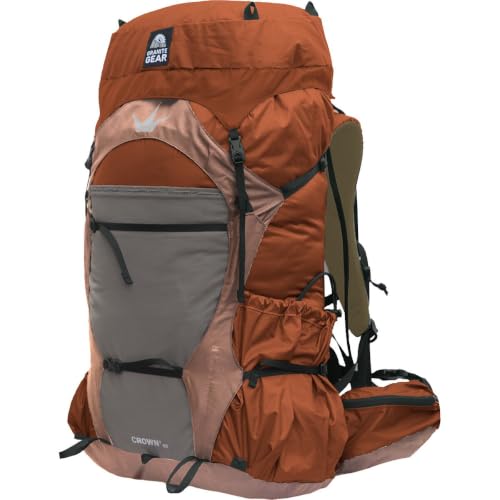
Granite Gear Crown3 60L Backpack
The removable framesheet and lid mean one pack covers a loaded five day carry and a stripped weekend at under two pounds. Very few packs at this price adjust that far in both directions.
Best for: The second pack, when you know your base weight but it still moves season to season.
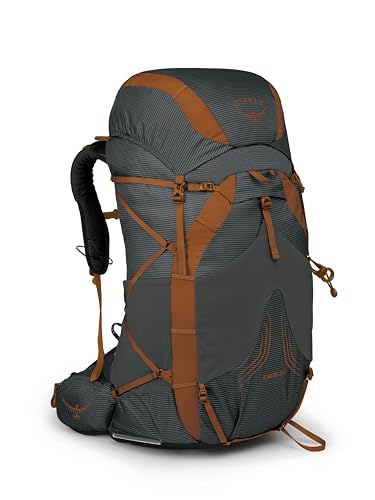
Osprey Exos 58 Ultralight Backpacking Pack
The trampoline back panel is still the best answer to a sweat-soaked back in the humid east, and Osprey covers it under their all-mighty guarantee. You pay for that in a few extra ounces of frame.
Best for: Humid summer hiking, and anyone who has never got on with a pack that sits flat against the spine.
Hyperlite Mountain Gear Southwest 55
Dyneema Composite Fabric, seam-taped, effectively waterproof, and the pack that made ultralight packs a mainstream category. It has no lid and very little structure, which is the trade.
Best for: A base weight already under about 14 lb. Overload a frameless or lightly framed pack and it carries worse than a cheap one.
Zpacks Arc Haul Ultra 60
An external carbon arc frame that keeps the pack off your back and still lands around 21 ounces. It is the lightest genuinely load-carrying pack most people will ever use.
Best for: Thru-hikers counting single ounces. Do not buy this as a first pack, the fit window is narrow.
Weights are the manufacturer's listed figures. Prices and stock change constantly, so confirm on the retailer page. We earn commissions from Backcountry and from qualifying Amazon purchases. Cottage gear sold direct earns us nothing and is listed anyway.
What is the middle ground most people should buy?
The interesting packs are not at either end, they are the ones that let you choose. The Granite Gear Crown3 60L is the clearest example: a removable framesheet and a removable lid mean one pack handles a loaded five day carry with the structure in, then strips to under two pounds for an overnight where you are carrying twelve pounds total. That is two packs for one purchase, and it is exactly the right answer for a hiker whose base weight is still moving season to season.
A pack that lets you remove the frame is different from a pack with no frame. The removable framesheet pack was designed around a hipbelt that works when the sheet is in place, so when the sheet is in place the load transfers properly. A pack designed with no frame at all was designed around never needing that transfer, so stripping a framed pack and running a frameless pack are not the same experience even at the same weight.
On the ventilated side, the Osprey Exos 58 spends its extra ounces on a tensioned trampoline back panel that holds the pack off your spine. In humid summer conditions that airflow is worth more to most people than the eight ounces it costs, and it is the pack for anybody who has never got on with a load sitting flat against a sweating back. At the budget end, the Naturehike Rock 2.0 60L is the heaviest pack here and also the one that leaves enough money in the budget to buy a quilt, which will save you far more weight than the pack ever could.
How does an external arc frame change the maths?
The external arc frame is the one design that genuinely bends the curve. The Zpacks Arc Haul Ultra 60 puts a carbon frame outside the pack body, tensioned into an arc that stands the pack off your back. That gives you real load transfer into the hipbelt and real ventilation at a published 1 pound 5 ounces, which is lighter than most frameless packs of the same volume. It is the lightest pack here and it is also one of the two highest ceilings in the frameless-adjacent group.
The cost is fit tolerance and price. An arc frame has a narrow window in which it is tensioned correctly for your torso, and outside that window it is a stiff carbon hoop doing nothing useful. It is not a first pack, and it is not a pack to buy without measuring your torso carefully. The Hyperlite Mountain Gear Southwest 55 sits nearby with a different trade: seam taped Dyneema Composite Fabric that is effectively waterproof, very little structure, no lid, and a ceiling that assumes your base weight is already under about 14 pounds.
Going ultralight must not mean going unprepared. A pack that hurts is an inconvenience. A pack that made you leave the rain shell, the insulation or the water treatment behind so the load would fit is a hazard. Hypothermia does not require winter: wet clothing, wind, and a hiker who has stopped moving will do it at 45 degrees Fahrenheit. Shelter, insulation, rain gear, navigation, water treatment and a way to call for help are fixed costs, not places to save grams. Size the pack to the kit you must carry rather than cutting the kit to fit the pack you bought.
Can a foam pad replace a frame?
Partly, and it is the standard workaround. A closed cell foam pad such as the Therm-a-Rest Z Lite Sol can be folded flat against the back panel or rolled into a cylinder inside the pack body, and either arrangement gives the load a vertical structure to stack against instead of a soft mass that slumps into your lumbar spine. Many frameless packs are explicitly designed around this, with a sleeve for exactly that purpose.
Be honest about what it achieves. A foam pad stiffens the pack and stops it barrelling. It does not put weight on your hips, because foam does not transmit compressive load into a hipbelt the way an aluminium stay does. It raises the comfortable ceiling of a frameless pack by a few pounds, not by ten. The upside is that it is free, since you were carrying the pad anyway, and it is the reason so many frameless users run foam rather than an air pad.
The related discipline is packing. A frameless pack punishes bad packing far harder than a framed one does, because there is nothing holding the shape except the gear itself. Soft items against the back panel, dense items high and close to your spine, nothing sharp anywhere near your kidneys. Read how to pack a backpack before you conclude a frameless pack is uncomfortable, because a badly packed frameless pack and a genuinely overloaded one feel identical.
Who should choose frameless, and who should choose framed?
Choose frameless if your base weight is genuinely under about 10 to 12 pounds, your longest food carry is four days or less, your water carries are short because you hike where water is frequent, and you are willing to pack carefully every single morning. Frameless suits fastpackers, summer hikers on well watered trails, and anyone whose kit list has already been through a real shakedown. It also suits people with a genuinely light body frame, since the percentage guidance scales with you.
Choose framed if any of the following is true. You carry a bear canister, which is 2 pounds 1 ounce to 2 pounds 12 ounces of rigid awkward volume before any food goes in it. You hike in the desert or anywhere with long dry stretches. Your trips run five days or longer between resupply. Your base weight is above about 14 pounds. You are carrying group gear, a camera kit, or anybody else's water. You have a history of shoulder, neck or back trouble. Or you simply do not yet know what your loaded weight will be, which describes most people buying their second pack.
Volume matters here too, and it is a separate axis from frame. A 40 litre pack forces a light kit whether or not it has a frame, and a 60 litre pack invites you to fill it. The pack volume by trip length reference sets out what each capacity honestly holds, which is a better starting point than picking a number that sounds right.
What is the honest case against the frameless pack?
The strongest argument against frameless is not comfort, it is that it is the wrong purchase order. The pack is the only item in the Big Three whose correct specification is determined entirely by the other two. Your shelter and your sleep system decide your base weight, your base weight and your trip profile decide your loaded weight, and your loaded weight decides what pack can carry it. Buy the pack first and you have fixed the answer before you know the question.
This is the classic expensive mistake and it is remarkably consistent. Somebody reads that ultralight hikers use frameless packs, spends $400 on a two pound Dyneema pack, loads it with a 17 pound traditional base weight plus five days of food, walks eleven miles, and concludes that ultralight is a marketing story invented to sell fragile equipment. The pack was never the problem. The pack was a symptom of an order of operations problem, and the fix costs another $200 because the light pack cannot be un-bought.
The second argument is durability. Frameless packs are usually built in the lightest fabrics available, and light fabrics abrade. A pack set down on granite twice a day for a thru-hike season wears through, and the same Dyneema that keeps water out is not immune to the ground. The third is resale of your own decision: a frameless pack locks in a base weight target, and if your life changes so that you now hike with a partner who needs you to carry the tent, the pack cannot adapt. A removable framesheet can.
None of that means frameless packs are bad. It means the frameless pack is the reward for having already done the work, not the tool that does the work for you.
How should you actually decide?
Work through it in this order and the pack chooses itself.
First, weigh what you own. Not the manufacturer figures, the actual items on a scale. Get a real base weight from the base weight calculator using measured numbers, because published weights run optimistic often enough to move you a whole tier.
Second, define your worst realistic trip, not your typical one. The longest food carry you will do this year, the longest water carry, plus a canister if the agency requires one. Add those consumables to your base weight. That figure, not your base weight, is what the pack has to carry.
Third, compare it to 25 pounds. Under 25, frameless is genuinely on the table. Between 25 and 30, buy a pack with a removable framesheet so you can run it both ways. Over 30, buy a frame and stop reading gear lists that tell you otherwise, because the people writing them are describing a base weight that is not yours yet.
Fourth, buy the pack last. Cut base weight with the shelter, the sleep system and the clothing first, then buy the pack that fits the kit you finished with. The ultralight backpack roundup covers the specific models at each tier, and the arithmetic above tells you which tier is yours. A pack that carries your real load comfortably at 2 pounds 10 ounces beats a pack that ruins your shoulders at 1 pound 5 ounces, every trip, without exception.
Frequently asked questions
At what weight does a frameless pack stop working?
Frameless packs carry well up to roughly 25 pounds of total loaded weight, get progressively less pleasant from there, and stop working somewhere around 30 pounds. Above that the load rides on your shoulders and upper back rather than your hips, the hipbelt becomes decoration, and the pack that saved you a pound costs you the day. The number that matters is total weight, not base weight.
Does a foam sleeping pad really work as a pack frame?
Well enough that it is the standard trick. A closed cell foam pad rolled into a cylinder inside the pack body, or folded flat against the back panel, gives the load a vertical structure to sit on instead of a sack of soft gear that slumps. It does not transfer weight to your hips the way an aluminium stay does, but it stops the pack collapsing and it costs nothing because you were carrying the pad anyway.
What is the difference between a framesheet, stays and an external frame?
A framesheet is a stiff plastic panel that stops the pack barrelling and spreads load across your back. Stays are one or two aluminium bars running vertically to carry weight down into the hipbelt. An external arc frame sits outside the pack body, holds it off your spine for airflow, and does the same load transfer job. Stays and arc frames move weight to your hips. A framesheet alone mostly just keeps the shape.
Should my first ultralight pack be frameless?
Almost never. The pack is the last of the Big Three you should replace, because the pack you can carry is decided by everything else you own. Buy the shelter, the sleep system and the insulation first, get your base weight down, then buy a pack sized to the kit you actually have. Buying the frameless pack first is the classic expensive mistake and it usually ends in a second pack purchase.
How much weight does a frame actually cost?
Between about 6 and 20 ounces depending on the design. A removable framesheet and stay set is commonly 6 to 10 ounces, a full internal frame with a structured hipbelt is more, and a ventilated trampoline suspension is the heaviest because it needs a rigid perimeter to tension the mesh. An external carbon arc frame is the outlier, adding real load transfer for very little weight, at a price and a fit tolerance to match.
Can I take the frame out of a framed pack for short trips?
On packs designed for it, yes, and that is the most useful feature in the category. A pack with a removable framesheet and lid covers a loaded five day carry with the frame in and a stripped overnight with it out, so one purchase covers two use cases. Removing structure from a pack that was not designed to lose it just gives you a badly shaped sack with a useless hipbelt.
How we choose: we compare published manufacturer specifications, listed weights, and verified owner reviews across retailers. We do not test gear in person, and every weight quoted here is the manufacturer's figure unless we say otherwise, so weigh your own kit before you trust a total. Going lighter also means carrying less margin, so treat insulation, navigation, water treatment and an emergency plan as fixed costs rather than places to save grams.