Trekking Pole Tent vs Freestanding Tent
A trekking pole shelter can land near 20 ounces where a comparable freestanding tent is closer to 40, because the saving comes from deleting the 10 to 16 ounce tent pole set rather than from thinner fabric. Choose a trekking pole shelter only if you already hike with poles and camp on ground that takes stakes. Choose freestanding for rock slab, wooden tent platforms, frozen ground and any trip where pitching must be quick and thoughtless.
If you already hike with trekking poles and you camp on ground that holds a stake, a trekking pole shelter is the single largest weight saving available in the entire kit: near 20 ounces where a comparable freestanding tent is closer to 40. If either of those two conditions fails, it is not a saving at all, it is a problem you have bought. That is the verdict, and unlike most gear decisions it turns on facts about your trips rather than preferences about your kit.
Why is a trekking pole tent lighter?
Not because the fabric is thinner. That is the assumption almost everyone starts with and it is wrong, and getting it right changes how you evaluate the trade.
A tent pole set on a two person freestanding tent weighs roughly 10 to 16 ounces of aluminium alloy, shock cord, hubs and end fittings. That hardware has exactly one job: to hold the fabric up in a shape. It carries nothing, insulates nothing and keeps out no weather. It is pure structure.
You are already carrying two rigid, adjustable, load bearing aluminium or carbon tubes. They are in your hands for eight hours a day, and at night they are lying on the ground doing nothing. A trekking pole shelter is the observation that one of those two sets of tubes is redundant, and the redundant one is the set you carry only for the tent. Delete it and two items become one.
The Durston X-Mid 2 Pro is published at 1 lb 4 oz, which is 20 ounces. The Big Agnes Copper Spur HV UL2 is published at 3 lb 2 oz, which is 50 ounces. Some of that 30 ounce gap is the pole set and some of it is the Dyneema Composite Fabric the X-Mid Pro is built from, which is a separate axis covered in the fabric and denier reference. If you compare a silnylon trekking pole shelter against a silnylon freestanding tent, the gap narrows to roughly the pole set plus a little, which is 12 to 18 ounces and still the biggest single saving in the Big Three.
Shelter is a fixed cost, not a place to save grams. Whichever design you choose, it has to keep you dry and out of the wind in the worst conditions you will actually meet, not the conditions you hope for. Going ultralight must not mean going unprepared. A tarp that works in a sheltered valley in summer is not the same shelter on an exposed ridge in shoulder season, and a wet, wind exposed hiker who has stopped moving can become hypothermic at 45 degrees Fahrenheit. Shelter, insulation, rain gear, navigation, water treatment and a way to call for help are fixed costs. Take the grams from somewhere else.
How do the two types compare head to head?
Weights below are the published manufacturer figures for the tents listed on this site. The qualitative rows are the ones that decide most purchases and never appear on a spec sheet.
| Factor | Trekking pole shelter | Freestanding tent | Delta |
|---|---|---|---|
| Two person shelter, published weight | 20 to 30 oz | 38 to 68 oz | 18 to 38 oz |
| Dedicated pole hardware carried | 0 oz | 10 to 16 oz | 10 to 16 oz |
| Stakes required for a valid pitch | 6 to 10 | 0 to 4 | Up to 10 |
| Pitches on rock slab | No, needs improvised anchors | Yes | Freestanding wins |
| Pitches on a wooden tent platform | No, without cord tricks | Yes | Freestanding wins |
| Pitches on frozen ground | No, without deadmen | Yes, weighted with gear | Freestanding wins |
| Setup time, practised | 4 to 7 min | 3 to 5 min | 1 to 3 min |
| Setup time, first ten attempts | 10 to 20 min | 5 to 8 min | 5 to 12 min |
| Sustained wind, good pitch | Excellent, low and guyed | Good, more surface area | Pole shelter wins |
| Gusty wind, mediocre pitch | Poor, sags and flaps | Good, shape is inherent | Freestanding wins |
| Condensation, humid still night | Single wall, expect damp | Double wall, mesh stays dry | Freestanding wins |
| Can be relocated once pitched | No, repitch it | Yes, pick it up and move it | Freestanding wins |
| Broken pole outcome | No shelter and no walking aid | Splint sleeve, fixed in minutes | Freestanding wins |
| Liveability for two adults | Good, offset geometry helps | Excellent on the roomier models | Freestanding wins |
| Price on this site | About $700 | $101.15 to $599.95 | Varies |
| Verdict | Lightest, if you carry poles and camp on soil | Most forgiving of ground, weather and fatigue | 18 to 38 oz |
What are the real costs of a trekking pole shelter?
Three, and they are all practical rather than theoretical.
You have to actually hike with poles. This sounds obvious and it is the most commonly ignored condition. If you buy a pole shelter and then buy dedicated tent poles for it, the saving evaporates while the pitching difficulty remains. Poles are worth carrying on their own merits, since they take load off knees on descents and add two points of contact on stream crossings, but that has to be a decision you would have made anyway. The trekking pole roundup covers what to look for.
The pitch takes practice and needs stakes that hold. A freestanding tent achieves its shape from the poles regardless of how carelessly you work. A trekking pole shelter achieves its shape from tension between stakes, so a slack pitch is a saggy, flapping shelter that condenses more and performs badly in wind. Getting it consistently taut takes ten or fifteen attempts. Do those attempts in a garden, not on a ridge in the dark. Upgrading to Y beam aluminium stakes is also close to mandatory, since the round pins packed with many tents pull out of soft ground under exactly the load a pole shelter puts on them.
Some ground simply will not take it. Rock slab in alpine basins, wooden tent platforms in many eastern and alpine parks, frozen ground in shoulder season, deep loose sand, and forest floor so rooted that a stake stops two inches down. Every one of those defeats a staked shelter unless you improvise, and improvising in bad weather at the end of a long day is where a light shelter becomes an expensive one. Check the campsite type before you plan a trip around a pole shelter.
Does single wall condensation matter in practice?
Most trekking pole shelters are single wall or partial single wall, and most freestanding tents are double wall, so condensation tracks the comparison closely enough to treat as part of it.
The mechanism is simple. Warm moist air from your breath and body meets the coldest surface inside the shelter and condenses there. In a double wall tent that surface is the outer fly, and a mesh inner keeps you separated from it, so drips land on mesh and run down the outside. In a single wall shelter that cold surface is the wall you are sleeping next to, and brushing it transfers the water to your quilt.
In practice it is manageable rather than trivial. Site selection does most of the work: camp above valley floors and away from water, since cold damp air pools low. Pitch with the doors catching a breeze and keep vents open even when it is cold, because sealing a shelter makes condensation worse, not better. Keep wet gear outside or in a vestibule. Carry a small cloth and wipe the inside down before packing, which takes a minute and stops you packing water.
But there are nights when none of that is enough: still, humid, cold, beside a lake, in a valley. On those nights the single wall shelter will be wet inside and the double wall one will not, and if your trips look like that regularly the double wall is worth its ounces. The shelter format guide works through the full range including tarps and hammocks.
What do the real options look like?
Trekking pole shelters
Durston X-Mid 2 Pro
Trekking poles replace tent poles, so two items become one and the tent lands near 20 ounces in Dyneema. The offset pole geometry means the doors are actually usable, which most pole tents cannot claim.
Best for: Anyone already hiking with poles. If you do not use poles this is a bad trade, not a good one.
Weights are the manufacturer's listed figures. Prices and stock change constantly, so confirm on the retailer page. We earn commissions from Backcountry and from qualifying Amazon purchases. Cottage gear sold direct earns us nothing and is listed anyway.
The Durston X-Mid 2 Pro is sold direct only, like most cottage shelters, and its offset pole geometry is the detail worth understanding. Older pole tent designs put a pole in the middle of the doorway, which is exactly where you want to walk. Offsetting the poles moves them out of the entry, so both doors are genuinely usable. At 1 lb 4 oz it is roughly two and a half times lighter than a comparable freestanding tent, and it will not stand up without your poles and a set of stakes that hold.
Freestanding and semi freestanding tents
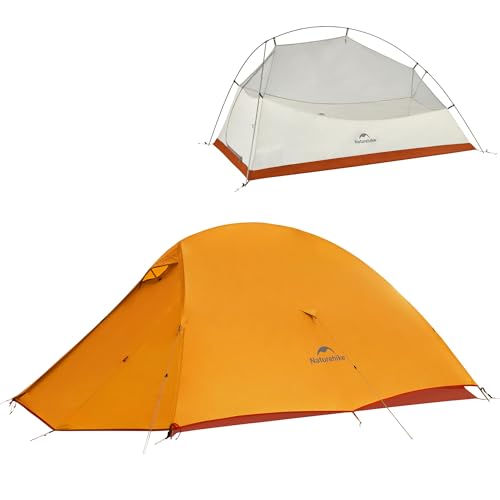
Naturehike Cloud Up Base 2 Person Tent
A double wall freestanding two person tent with a footprint included, at a sixth of the price of the flagship. Listed at 4.25 lb without the footprint, which is heavy by ultralight standards and light by any other.
Best for: Learning what you actually want in a shelter before spending $600 finding out.

NEMO Hornet OSMO 2P
Semi-freestanding, so it goes up on a tent pad or a rock slab where a staked shelter will not. OSMO fabric stretches less when wet than the silnylon it replaced, which is the practical difference on a rainy multi-day.
Best for: Established campsites, alpine platforms, and anyone who does not want to think about pitch tension at midnight.

Big Agnes Copper Spur HV UL2
Two doors, two vestibules, near vertical walls and enough headroom to sit out a storm day without going mad. It is the heaviest tent here and the only one two adults can genuinely live in.
Best for: Couples, and shoulder season trips where you may spend real time inside the tent.
Weights are the manufacturer's listed figures. Prices and stock change constantly, so confirm on the retailer page. We earn commissions from Backcountry and from qualifying Amazon purchases. Cottage gear sold direct earns us nothing and is listed anyway.
On the other side, the NEMO Hornet OSMO 2P at 2 lb 6 oz is the compromise most people are happiest with: semi freestanding, so it takes its shape from poles and needs only a few stakes at the foot, which means it goes up on a tent pad or a rock slab where a fully staked shelter will not. The Big Agnes Copper Spur HV UL2 at 3 lb 2 oz is the one two adults can genuinely live in through a storm day, with two doors, two vestibules and near vertical walls. And the Naturehike Cloud Up Base 2 at 4 lb 4 oz and $101.15 is how you find out what you actually want in a shelter without spending $600 to learn it. The tent weight reference puts all of them on one scale, and the tent roundup covers the picks in detail.
One more line item people forget on the freestanding side: the footprint. Many tents sell one separately at 4 to 8 ounces, and manufacturer weights usually exclude it. A polycryo sheet cut to size does the same job for about 1.5 ounces and a few dollars. Whichever you use, add it to your number honestly, because a 2 lb 6 oz tent with an 8 ounce footprint is a 2 lb 14 oz shelter.
What happens when a pole breaks?
This is the failure mode that separates the two designs most sharply, and it is worth thinking through before you are standing in the rain holding two pieces of carbon.
A freestanding tent ships with a short aluminium splint sleeve. A broken segment gets the sleeve slid over it and taped, and the tent stands again in about two minutes. The failure is annoying and it is contained.
A trekking pole shelter loses two things at once. The shelter has no structure, and you have lost a walking aid on terrain that just proved it was hard enough to break a pole. Carbon poles are lighter and they snap cleanly under a sideways load. Aluminium poles bend instead, which is ugly and usually still usable, and that is a genuine argument for aluminium on rocky ground and scree.
Trekking poles, including the pole that holds up your tent
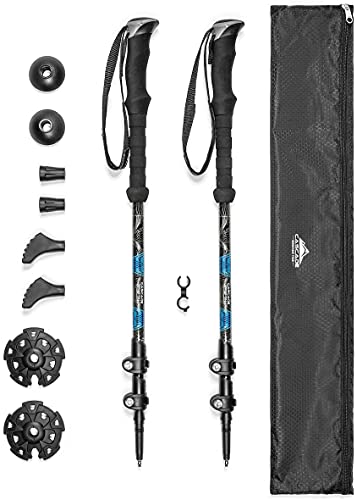
Cascade Mountain Tech Carbon Fiber Trekking Poles
Carbon poles at an aluminium price, and the pair most commonly seen holding up a trekking pole tent. Flip locks are the failure point, so carry a small screwdriver or check them at every road crossing.
Best for: Nearly everyone, and mandatory if your shelter needs poles to stand up.
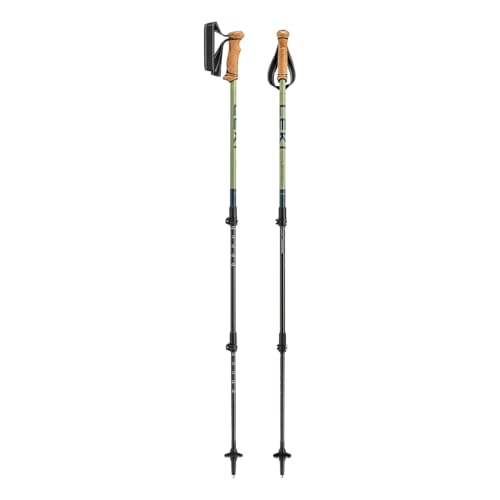
LEKI Legacy Lite Trekking Poles
Aluminium rather than carbon, which means they bend under a sideways load instead of snapping, and LEKI sells replacement parts for them years later. Heavier than the carbon options by a few ounces and far less likely to end a trip.
Best for: Rocky terrain, scree, and anyone who has already broken a carbon pole.

Black Diamond Distance Carbon Z Trekking Poles
Z-folding, fixed length, no adjustment mechanism to fail. Fixed length means you must buy the right size the first time, and it means they cannot be shortened to pitch a shelter that wants a specific height.
Best for: Runners and fast packers who want the poles stowed on their pack half the day.
Weights are the manufacturer's listed figures. Prices and stock change constantly, so confirm on the retailer page. We earn commissions from Backcountry and from qualifying Amazon purchases. Cottage gear sold direct earns us nothing and is listed anyway.
If your shelter depends on them, choose accordingly. The Cascade Mountain Tech carbon poles are the pair most commonly seen holding up a trekking pole tent, at 10.4 ounces for the pair and $64.99, and the flip locks are the part to check regularly. The LEKI Legacy Lite poles are aluminium, so they bend rather than snap and LEKI still sells parts for them years later, which is the right trade if you spend your time on talus. The Black Diamond Distance Carbon Z poles are fixed length, which is a real problem for shelters that want a specific pitch height, so check your shelter requirement before buying them. Carry a few metres of cord regardless, so you can rig a ridgeline between trees if a pole is gone.
How should you decide?
Answer four questions in order and the choice makes itself.
First, do you hike with trekking poles now, on most trips, without being talked into it? If no, buy a freestanding or semi freestanding tent and stop here.
Second, what do the campsites on your trips look like? If they are wooden platforms, alpine slabs, established pads with compacted gravel, or frozen ground in shoulder season, buy freestanding. If they are forest duff, meadow and dispersed sites in soil, a pole shelter is open to you.
Third, how much time will you spend inside? A solo hiker who arrives at dusk and leaves at dawn barely notices liveability. Two people waiting out a full day of rain notice nothing else, and that is the case where a roomy freestanding tent earns its extra pound.
Fourth, will you practise? A pole shelter pitched carelessly is worse in every dimension than a freestanding tent pitched carelessly. If the honest answer is that you will pitch it for the first time at a campsite, buy the tent whose shape does not depend on you.
Whatever you land on, weigh it yourself and add the footprint, the stakes and the stuff sacks before you write the number on your gear list. The tent weight reference gives you the comparison baseline, and the Big Three guide puts the shelter decision in the order it belongs: first, because it holds the largest saving and because everything downstream depends on it.
Frequently asked questions
Where does the weight saving in a trekking pole tent come from?
From deleting the tent poles, not from thinner fabric. A two person freestanding tent carries a pole set weighing roughly 10 to 16 ounces, and that hardware exists only to hold the fabric up. If you already carry trekking poles, they can do that job, so the pole set becomes redundant weight. A trekking pole shelter can land near 20 ounces where a comparable freestanding tent is closer to 40.
Do trekking pole tents work if I do not use poles?
Not as a weight saving. You can buy dedicated carbon poles for the shelter, but then you are carrying poles for the tent instead of tent poles, and the saving mostly disappears while the pitching difficulty stays. If you do not hike with trekking poles and do not intend to start, a freestanding or semi freestanding tent is the correct choice and it is not a compromise.
Can a trekking pole tent pitch on rock or a wooden platform?
Not without improvised anchors. A staked shelter transfers all its structural load into the ground through stakes, so rock slab, wooden tent platforms, frozen ground, deep loose sand and heavily rooted forest floor all defeat it. The workarounds are real but fiddly: rocks tied to guyline, deadman anchors buried in snow, cord run to platform edges. Established campsites in alpine parks often mean platforms, so check before you commit.
Are single wall tents always wetter inside?
They condense more, because the inner surface you touch is also the cold outer surface where moisture forms. A double wall tent lets condensation form on the fly and keeps the mesh inner separate from it. Site choice, venting and a small cloth manage single wall condensation well in most conditions, but in humid, still, cold weather beside water, a single wall interior will be damp and a double wall one will not.
What happens if a pole breaks?
With a freestanding tent, a splint sleeve is usually packed with it and a broken segment is repairable in minutes. With a trekking pole shelter, a broken pole is a broken shelter and a lost walking aid at the same time, which is why aluminium poles that bend are safer than carbon poles that snap on rocky terrain. Carry cord and know how to rig a ridgeline from a tree.
Which type handles storms better?
A well pitched trekking pole shelter with taut guylines is excellent in wind, because its low profile and multiple ground anchors shed load rather than resisting it. A freestanding dome is more forgiving of a mediocre pitch and better in gusty, swirling wind where guyline direction is unpredictable. The deciding factor is usually not the design, it is whether the pitch is tight and the stakes are holding.
How we choose: we compare published manufacturer specifications, listed weights, and verified owner reviews across retailers. We do not test gear in person, and every weight quoted here is the manufacturer's figure unless we say otherwise, so weigh your own kit before you trust a total. Going lighter also means carrying less margin, so treat insulation, navigation, water treatment and an emergency plan as fixed costs rather than places to save grams.