Therm-a-Rest NeoAir XLite NXT Review: 13 oz, R-Value 4.5
Thirteen ounces in regular, three inches thick, a 4.5 R-value from ThermaCapture reflective layers and Triangular Core Matrix construction, rolling as small as a one litre bottle, with a pump sack and patch kit included. Buy it as the default ultralight pad; almost nothing matches this warmth-to-weight. The weakness is inherent to the design: it is a thin-walled air pad, and a puncture means a night on the ground unless you find and patch it.
The reference ultralight pad, three inches thick, rolling to the size of a water bottle.
Therm-a-Rest NeoAir XLite NXT Ultralight Sleeping Pad, Regular, Solar Flare
Under $250
A foam-free ultralight air pad at 13 oz in regular, three inches thick, with a 4.5 R-value and a WingLock valve.
Check price on AmazonSpecifications
| R-value | 4.5 |
|---|---|
| Weight | 13 oz, 370 g in regular |
| Dimensions | 20 x 72 in, 51 x 183 cm in regular |
| Thickness | 3 in, 7.6 cm |
| Packed size | Rolls as small as a conventional 1 litre bottle |
| Valve | WingLock, for easy inflation and fast deflation |
| Insulation | Reflective ThermaCapture layers and Triangular Core Matrix construction |
| Included | Pump sack, stuff sack and patch kit |
| Stuff sack | PFAS-free DWR coating |
Specifications above come from Therm-a-Rest's published specifications. Treat pricing as approximate, since Amazon pricing moves.
What it does well
- A 4.5 R-value at 13 ounces is the number that makes this the reference pad. That is genuinely a year-round R-value at a summer pad's weight.
- Three inches of thickness means side sleepers do not bottom out, which is the most common complaint about thinner ultralight pads.
- Rolling to the size of a one litre bottle changes what pack you need. Sleep system bulk is what forces people into larger packs.
- The WingLock valve deflates fast, which sounds trivial until you are packing up in rain and the pad is the last thing keeping you there.
- A pump sack is included, which matters more than it sounds: blowing a pad up by mouth puts moisture inside it, and that eventually degrades the insulation and can grow mould.
Where it falls short
- It is a thin-walled inflatable. Punctures happen, and a punctured pad on a cold night is not a minor inconvenience, because R-value goes to almost nothing. Carry the patch kit and use a groundsheet.
- NeoAir pads have a reputation for being noisy. The NXT generation is quieter than earlier versions and it is not silent, and some sleepers and tent partners notice.
- Air pads feel different from foam. Some people never get on with the floating sensation, and there is no way to know until you have slept on one.
- Two hundred dollars for a pad is a lot, and a closed cell foam pad costs a tenth as much, never punctures and is far less comfortable and far bulkier.
- R-value is a rating of the pad, not of your night. A 4.5 pad under a summer quilt is still a cold night, because the system is what has a temperature.
What owners report
The XLite has been the reference ultralight pad for over a decade and owner reports reflect that: unmatched warmth per ounce, genuinely comfortable, and people worry about punctures. The NXT revision is consistently described as quieter than the pads it replaced, which addressed the loudest complaint about the previous generation.
Our XLite versus NEMO Tensor comparison is the direct head to head, and quietness is the main axis. Our inflatable versus foam comparison is the more fundamental one, and foam's argument is simple: it cannot fail.
What matters is the whole sleep system. Our sleep system temperature calculator combines pad R-value with quilt or bag rating, and it is the right way to plan a cold night. A warm quilt on a cold pad is a cold night, and it is the mistake most new ultralight hikers make.
Who it suits
- Anyone building an ultralight sleep system where R-value per ounce is the deciding number.
- Side sleepers who bottom out on thinner pads.
- Hikers using a quilt, where pad R-value does half the work.
Who should skip it
- Hikers who cannot tolerate the risk of a puncture on a cold trip without a foam backup.
- Light sleepers who are woken by pad noise, where the NEMO Tensor is quieter.
- Anyone on a tight budget, where a foam pad costs a tenth as much.
Alternatives worth considering
NEMO Equipment Tensor All-Season Sleeping Pad, Regular Mummy
Under $250
Two layers of floating Thermal Mirror film that NEMO describe as quiet insulation, with 3.5 inches of loft and Spaceframe baffles that eliminate springiness. The choice if pad noise is what has bothered you.
Check price on AmazonTherm-a-Rest Vesper Quilt 32F/0C Down
Under $500
A pad and a quilt are one system. Fifteen ounces of 900 fill down with connectors designed to work with a regular pad around three inches thick, which is exactly what this pad is.
Check price on AmazonKelty Cosmic 20 Down Mummy Sleeping Bag, 550 Fill Power
Under $250
An ISO-rated mummy bag with a hood, at a 21 F ISO limit. Heavier and more forgiving than a quilt, and it puts less of the thermal burden on the pad.
Check price on AmazonKeep reading
- NeoAir XLite vs NEMO Tensor
- Inflatable vs foam sleeping pad
- Quilt vs sleeping bag
- Sleep system temperature calculator
- Sleeping bag temperature ratings
- The Big Three explained
- NEMO Tensor All-Season review
- Therm-a-Rest Vesper 32F quilt review
- Best sleeping pads
This review draws on published specifications, manufacturer figures and the consensus of verified owner reviews. We have not tested this product ourselves, and we say so rather than implying otherwise. As an Amazon Associate we earn from qualifying purchases.
Frequently asked questions
What R-value do I need in a sleeping pad?
Roughly 2 or above for warm summer nights, around 4 or above for use near freezing, and 5 or more for winter and snow. A 4.5 R-value covers three seasons comfortably for most sleepers. Cold sleepers should go higher rather than compensating with a warmer bag, because the ground takes heat faster than air does.
Is the NeoAir XLite noisy?
Earlier NeoAir generations were known for it. The NXT revision is consistently described by owners as quieter, and it is not silent. If pad noise is a specific concern, the NEMO Tensor is the quieter alternative and our comparison covers both.
What happens if it punctures?
You lose almost all of the R-value and most of the comfort, and you finish the night on the ground. Carry the included patch kit, use a groundsheet, and check for sharp objects before pitching. Some hikers on cold trips carry a thin foam pad as insurance, which also gives you something to sit on.
Should I inflate it with my mouth?
No, use the pump sack. Breath carries moisture into the pad, and over time that degrades the insulation and can grow mould inside where you cannot clean it. The pump sack is included for exactly this reason and it takes about the same time.
Inflatable or foam pad?
Inflatable pads are far warmer and more comfortable per ounce, and they can fail. Foam pads are bulky, less comfortable, cost very little and cannot puncture. Many hikers on long trails carry an inflatable and accept the risk; some carry foam for exactly the opposite reason.
How we choose: we compare published manufacturer specifications, listed weights, and verified owner reviews across retailers. We do not test gear in person, and every weight quoted here is the manufacturer's figure unless we say otherwise, so weigh your own kit before you trust a total. Going lighter also means carrying less margin, so treat insulation, navigation, water treatment and an emergency plan as fixed costs rather than places to save grams.
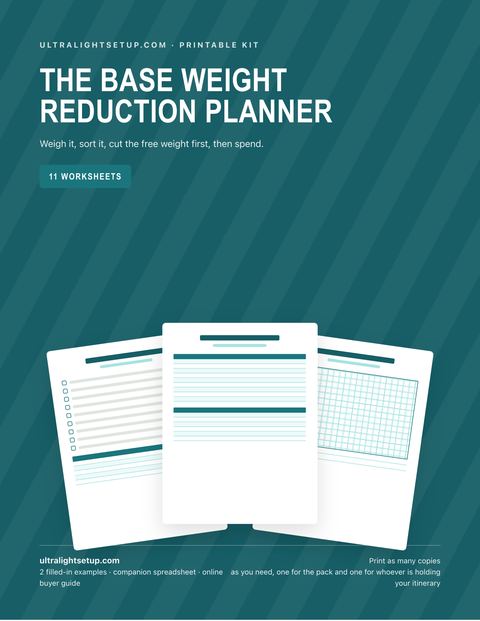
Weighing your own kit item by item? The Base Weight Reduction Planner is the paid version of these pages: 11 printable worksheets you fill in with your own numbers, two filled-in examples, a companion spreadsheet and the full PDF, $29.