NEMO Tensor All-Season Review: The Quiet One
Two layers of floating Thermal Mirror metallised film, Spaceframe baffles with low-stretch die-cut trusses, and 3.5 inches of loft on bluesign approved nylon. Buy it if pad noise is the thing that has been waking you or your tent partner, because quiet is the specific problem this pad was designed to solve. Note that R-value is the number to check for your conditions, and NEMO publish it for this model, so confirm the current figure against the season you are planning for.
Two layers of Thermal Mirror film and Spaceframe baffles, for people whose pad wakes them up.
NEMO Equipment Tensor All-Season Sleeping Pad, Regular Mummy, Blade and Spicy Orange
Under $250
An insulated air pad using two layers of floating Thermal Mirror film, Spaceframe baffles and 3.5 inches of loft in bluesign approved nylon.
Check price on AmazonSpecifications
| Insulation | Two layers of floating Thermal Mirror metallised film |
|---|---|
| Noise | NEMO describe the insulation as quiet |
| Baffles | Spaceframe, using low-stretch die-cut trusses that eliminate springiness |
| Loft | 3.5 inches |
| Fabric | bluesign approved premium nylon, for puncture and tear resistance |
| Shape | Mummy, regular |
Specifications above come from NEMO's published product information. Treat pricing as approximate, since Amazon pricing moves.
What it does well
- Quiet is the reason this pad exists. Metallised film insulation is what makes most warm air pads crinkle, and NEMO's floating film design is specifically aimed at that.
- Three and a half inches of loft is thicker than most ultralight pads, which is what stops side sleepers feeling the ground through a hip.
- Spaceframe baffles with low-stretch trusses reduce the bouncy, floating feel that puts some people off air pads entirely.
- A mummy shape removes fabric where your legs are not, which saves weight and packed volume without costing usable width.
- bluesign approved fabrics with a focus on puncture resistance is a sensible priority for a pad, where a hole ends the night.
Where it falls short
- R-value is the specification that decides whether a pad suits a season, and it is not stated in this listing. Check NEMO's current published R-value for the All-Season before planning a cold trip around it.
- Like every inflatable it can puncture, and a punctured insulated pad loses nearly all of its R-value. Carry a patch kit and use a groundsheet.
- A mummy shape is narrower at the feet, which suits most sleepers and annoys anyone who sleeps sprawled.
- Insulated air pads are heavier than uninsulated ones. This is not a summer pad and it is not the lightest pad you can buy.
- Inflating by mouth introduces moisture into the pad, which degrades insulation over time. Use a pump sack, and check whether one is included with the version you buy.
What owners report
Owner reports on the Tensor family consistently single out quietness, which is exactly the thing NEMO set out to fix and exactly the thing NeoAir owners complain about. Comfort reports are strong, and the criticisms are the ones every air pad attracts: puncture anxiety and inflation time.
Our NeoAir XLite versus NEMO Tensor comparison is the direct head to head. In short, the XLite has the best published warmth-to-weight and the Tensor is quieter and thicker. Our inflatable versus foam comparison covers the option that cannot fail.
Whichever pad you choose, plan the system rather than the item. Our sleep system temperature calculator combines pad R-value and quilt or bag rating, and the temperature ratings reference explains why a bag's rating alone tells you very little.
Who it suits
- Light sleepers and tent partners who are woken by pad noise.
- Side sleepers who want 3.5 inches rather than 2.5 or 3.
- Anyone who dislikes the bouncy feel of a conventional air pad.
Who should skip it
- Hikers optimising purely for warmth per ounce, where the XLite's published figures lead.
- Summer-only use, where an insulated pad is more pad than the trip needs.
- Anyone who wants a pad that cannot puncture, which means foam.
Alternatives worth considering
Therm-a-Rest NeoAir XLite NXT Ultralight Sleeping Pad, Regular
Under $250
A 4.5 R-value at 13 oz, three inches thick, rolling to the size of a one litre bottle. Louder than the Tensor, and the reference pad for warmth per gram.
Check price on AmazonTherm-a-Rest Vesper Quilt 32F/0C Down
Under $500
A quilt provides nothing underneath you, so the pad does that job. Fifteen ounces of 900 fill down with pad connectors sized for a regular pad around three inches thick.
Check price on AmazonKelty Cosmic 20 Down Mummy Sleeping Bag, 550 Fill Power
Under $250
An ISO-rated bag with a hood at a 21 F ISO limit rating. Heavier, and it removes both the draft management of a quilt and some of the burden on the pad.
Check price on AmazonKeep reading
- NeoAir XLite vs NEMO Tensor
- Inflatable vs foam sleeping pad
- Sleep system temperature calculator
- Sleeping bag temperature ratings
- Cold weather ultralight
- Therm-a-Rest NeoAir XLite NXT review
- Best sleeping pads
This review draws on published specifications, manufacturer figures and the consensus of verified owner reviews. We have not tested this product ourselves, and we say so rather than implying otherwise. As an Amazon Associate we earn from qualifying purchases.
Frequently asked questions
Is the NEMO Tensor quieter than a NeoAir?
That is the consistent finding in owner reports, and it is the design intent: NEMO's floating Thermal Mirror film is meant to insulate without the crinkle that metallised layers usually produce. If pad noise has woken you or a tent partner before, this is the pad to look at.
What R-value does the All-Season have?
NEMO publish an R-value for this model, and this listing does not state it. Check NEMO's current figure for the exact version you are buying before planning a cold trip around it, because All-Season is a product name rather than a specification.
Is 3.5 inches too thick?
For most people it is the point. Thicker pads keep side sleepers' hips off the ground, which is where thinner ultralight pads fail. The trade is a little more air to blow in and a slightly higher perch, which some hikers find less stable in a narrow shelter.
Do I need an insulated pad in summer?
Usually not for the insulation, and an insulated pad does not hurt. The ground takes heat from you all night, so R-value matters more than air temperature suggests, and an insulated pad that works year round saves owning two.
How do I stop a pad from puncturing?
Use a groundsheet, clear the pitch of sharp objects, and do not put the pad down on gravel or thorns outside the shelter. Carry the patch kit. Most punctures are pitch selection failures rather than fabric failures.
How we choose: we compare published manufacturer specifications, listed weights, and verified owner reviews across retailers. We do not test gear in person, and every weight quoted here is the manufacturer's figure unless we say otherwise, so weigh your own kit before you trust a total. Going lighter also means carrying less margin, so treat insulation, navigation, water treatment and an emergency plan as fixed costs rather than places to save grams.
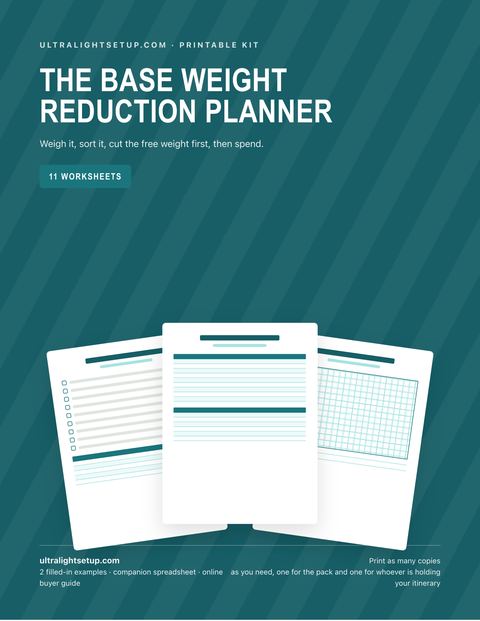
Weighing your own kit item by item? The Base Weight Reduction Planner is the paid version of these pages: 11 printable worksheets you fill in with your own numbers, two filled-in examples, a companion spreadsheet and the full PDF, $29.