NeoAir XLite NXT vs Nemo Tensor: Warmth, Noise and Weight
The XLite NXT is the lighter pad and has the higher warmth to weight ratio, which is why it dominates ultralight gear lists. The Tensor is quieter, flatter and more stable, which some sleepers find worth the extra ounces. Both are inflatable pads with real R values, and both will leave you cold on frozen ground if you take a summer pad into shoulder season.
Nemo Tensor All-Season sleeping pad, regular mummy
Under $250
Check price on AmazonAt a glance
| Therm-a-Rest NeoAir XLite NXT, regular | Nemo Tensor All-Season sleeping pad, regular mummy | |
|---|---|---|
| R value | Around 4.5 | Around 5.4 on the all season version |
| Weight, regular | Around 13 oz | Around 16 oz |
| Noise | Audible crinkle, quieter than earlier versions | Very quiet |
| Thickness | Around 3 inches | Around 3.5 inches |
| Stability | Tapered, can feel narrow | Flatter, more stable side to side |
| Inflation | Pump sack included | Pump sack included |
Choose the Therm-a-Rest NeoAir XLite NXT, regular if…
Choose the XLite NXT if base weight is the priority. It is the reference point for warmth per ounce in an inflatable pad and it is why it appears on so many gear lists. The crinkle is much reduced from earlier versions but has not gone, and the tapered shape can feel narrow to side sleepers. If those two things do not bother you, this is the efficient answer.
Check Therm-a-Rest NeoAir XLite NXT, regular on Amazon
Choose the Nemo Tensor All-Season sleeping pad, regular mummy if…
Choose the Tensor if you sleep badly on a noisy or unstable pad, which is a real and common reason to carry a few more ounces. The all season version also has the higher R value, which matters more than most weight decisions once the ground is near freezing. Sleep quality drives how far you can walk the next day, so this is not a soft preference, it is a performance one.
Check Nemo Tensor All-Season sleeping pad, regular mummy on Amazon
Related
Comparison based on published manufacturer specifications and the general consensus of owner reports. We have not tested these products side by side. Confirm current specifications and prices before buying. As an Amazon Associate we earn from qualifying purchases, at no extra cost to you.
Deciding on a specific model? We review the Therm-a-Rest NeoAir XLite NXT review and NEMO Tensor All-Season sleeping pad review in full.
Frequently asked questions
What R value do I actually need?
As a rough guide, around 2 for warm summer nights, 3 to 4 for three season use, and 5 or more once the ground is frozen. The ground pulls heat out of you far faster than the air does, so an underrated pad makes a good quilt feel useless. Work it out from the coldest ground you expect rather than the coldest air, since they are not the same.
Can you add warmth without buying a new pad?
Yes, and it is the cheapest way to extend a pad's range. A closed cell foam pad underneath adds roughly its own R value to the total and doubles as a sit pad, a splint and insurance against a puncture. Many people carry a thin foam pad with an inflatable one for exactly this reason in the shoulder seasons.
How likely is a puncture?
Likely enough that a repair kit is not optional. Both pads use thin fabrics and both can be holed by a thorn, a stove spark or a rough tent floor. Carry the patches, inflate the pad before pitching so you find a leak at a sensible hour, and consider a groundsheet if the ground is stony. A failed pad on a cold night is a safety problem, not a comfort one.
Do these pads work for side sleepers?
Both can, but the Tensor is generally the easier of the two because it is flatter and wider through the hips. On the XLite the tapered shape and the tendency to roll can wake a side sleeper up. Wide versions of both exist and cost a few ounces, which is usually a better trade than a poor night's sleep.
How we choose: we compare published manufacturer specifications, listed weights, and verified owner reviews across retailers. We do not test gear in person, and every weight quoted here is the manufacturer's figure unless we say otherwise, so weigh your own kit before you trust a total. Going lighter also means carrying less margin, so treat insulation, navigation, water treatment and an emergency plan as fixed costs rather than places to save grams.
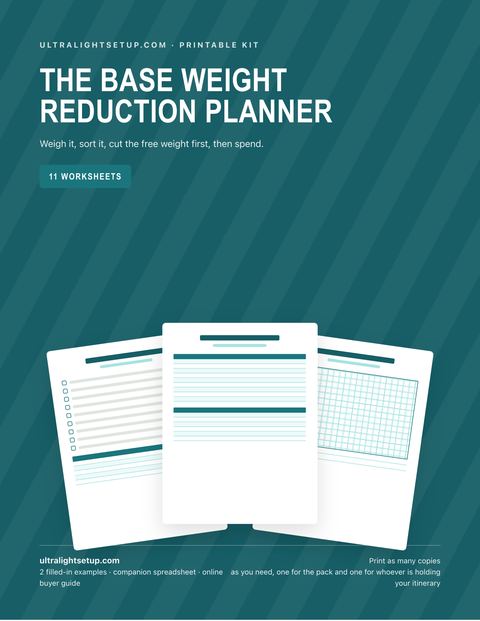
Weighing your own kit item by item? The Base Weight Reduction Planner is the paid version of these pages: 11 printable worksheets you fill in with your own numbers, two filled-in examples, a companion spreadsheet and the full PDF, $29.