Best Ultralight Stove: System Weight and Fuel Math
The MSR PocketRocket 2 ($49.95, 2.6 oz) is the best ultralight backpacking stove for most hikers because it has the pot stability and simmer control the sub-ounce stoves give up. Compare system weight, not stove weight: plan on roughly 0.5 oz of isobutane per 2 cup boil, and a 110 g canister holds about 3.9 oz of fuel.
A backpacking stove is the one category where the number on the box is actively misleading, because the stove is the smallest part of the weight you actually carry. The MSR PocketRocket 2 at $49.95 and a listed 2.6 oz is the pick for most hikers, with wide enough pot supports that a full pot stays upright and enough control to simmer rather than only roar.
Four stoves follow, from $16.89 to $164.99, and then the arithmetic that should decide between them: stove plus pot plus fuel, not the figure printed on the stove. Once you add a pot, the gap between the lightest option here and the heaviest closes to a couple of ounces.
Best ultralight backpacking stoves by experience level

BRS 3000T Ultralight Titanium Stove
Under an ounce and under twenty dollars, which is why it appears in more sub-10 lb gear lists than any other stove. The pot supports are small and it is poor in wind, so use a windscreen and a pot under a litre.
Best for: Solo hikers boiling water for freeze dried meals and coffee, nothing more ambitious.

MSR PocketRocket 2 Backpacking Stove
Wider pot supports and a far better simmer than the sub-ounce stoves, at under three ounces. The stove most people should own, and the one least likely to tip a full pot into the dirt.
Best for: Anyone cooking for two, or cooking anything more than boiled water.
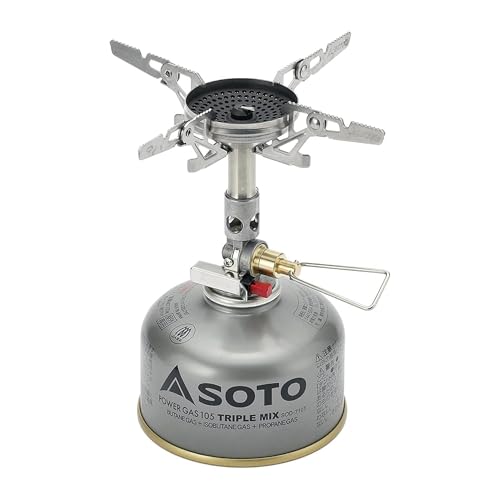
SOTO WindMaster with 4Flex
The recessed burner head keeps the flame lit in wind that blows out every other canister stove, and the micro regulator holds output as the canister cools. That is a real fuel saving on an exposed ridge, not a spec sheet claim.
Best for: Alpine and desert trips where there is no sheltered spot to cook, and late season use in the cold.

Jetboil Stash Cooking System
A heat exchanger pot plus stove that nests into itself and still comes in around seven ounces for the whole system. Compare the system weight, not the stove weight, before you decide this is heavy.
Best for: Cold weather and short fuel windows, where boiling faster on less gas is worth the bulk.
Weights are the manufacturer's listed figures. Prices and stock change constantly, so confirm on the retailer page. We earn commissions from Backcountry and from qualifying Amazon purchases. Cottage gear sold direct earns us nothing and is listed anyway.
Why stove weight is the wrong number
A stove on its own boils nothing. The unit you carry is a system: the burner, a pot to boil in, and a canister of fuel sized to the trip. Compare those three together and the rankings change completely, because an integrated system that looks heavy on the shelf includes a pot that the sub-ounce stoves do not.
Run it with the TOAKS Titanium 750ml pot at 3.6 oz, which is the standard solo pot and the one most of these stoves get paired with. The BRS 3000T at 0.9 oz becomes a 4.5 oz system. The MSR PocketRocket 2 at 2.6 oz becomes 6.2 oz. The SOTO WindMaster at 3.0 oz becomes 6.6 oz. The Jetboil Stash is 7.1 oz and that figure already includes its pot, so the real spread across the whole page is 2.6 ounces, not the 6.2 ounces the stove specs suggest.
That reframes the decision. You are not choosing between a 0.9 oz stove and a 7.1 oz stove. You are choosing between a 4.5 oz system that is unstable and poor in wind, and a 7.1 oz system that uses less fuel to do the same work. On a long trip, fuel saved can outweigh the hardware difference entirely.
How much fuel do you actually carry?
Fuel is the part of the kitchen that scales with trip length, so it is the part worth getting right. The planning figure to memorise: roughly 0.5 oz of isobutane per 2 cup boil, which is one freeze dried meal or two mugs of coffee. A 110 g canister holds about 3.9 oz of fuel, which works out to about seven to eight boils.
Two boils a day is a common pattern: coffee in the morning and a meal at night. On that schedule a 110 g canister covers roughly a four day trip, which is why the small canister and the standard resupply window line up as neatly as they do. Anything that pushes you past that, a longer carry or a hiking partner sharing the stove, moves you to the larger canister rather than to a second small one.
Three things break the estimate, and they break it in the same direction. Cold weather lowers canister pressure so the stove runs less efficiently. Wind steals heat before it reaches the pot, which is the single biggest cause of unexpected fuel use. Melting snow for water consumes fuel at a rate that has nothing to do with the numbers above. Carry margin whenever the temperature is near freezing, and do not plan a trip where running out of fuel means running out of drinking water. Our food planning guide covers how the cooking schedule interacts with the food you are carrying.
How do these systems compare?
| Stove | Price | Stove weight | System with 750ml pot | Strength |
|---|---|---|---|---|
| BRS 3000T | $16.89 | 0.9 oz | 4.5 oz | Lightest and cheapest |
| MSR PocketRocket 2 | $49.95 | 2.6 oz | 6.2 oz | Pot stability and simmer |
| SOTO WindMaster with 4Flex | $69.95 | 3.0 oz | 6.6 oz | Stays lit in wind |
| Jetboil Stash | $164.99 | 7.1 oz | 7.1 oz | Heat exchanger, pot included |
None of these figures include fuel or the canister itself, which are the same for all four and scale with trip length rather than with the stove you chose. Add the TOAKS spork at 0.6 oz and a PocketRocket 2 kitchen comes to 6.8 oz plus fuel, which is a realistic number to carry into the base weight calculator.
Does wind performance matter that much?
More than any other spec on the page, and it is the one that never appears in a weight comparison. Wind removes heat from the pot faster than the burner can add it, so an exposed pitch does not just slow the boil, it burns fuel that produced no useful heat at all. Enough of that and you are carrying a second canister you would not otherwise have needed.
The BRS 3000T is the worst offender here, which products listings are honest about: small pot supports and an exposed burner head. It is still a fine stove behind a rock or in a vestibule doorway, and a poor one on a bare ridge. The SOTO WindMaster answers the problem directly with a recessed burner head that stays lit in wind that blows out other canister stoves, plus a micro regulator that holds output as the canister cools. The Jetboil Stash answers it differently, with a heat exchanger that captures more of the heat the burner produces.
A word of caution on the obvious fix: never wrap a full windscreen tightly around an upright canister stove. Trapped heat raises canister temperature and pressure, and that is the one failure mode in this category that can actually hurt you. Use a partial shield, or position your pack and a rock upwind, or buy the stove built for it.
What else goes in the kitchen?
Very little, and that is the point. For most ultralight hikers the entire cook kit is a stove, a 750ml titanium pot, a long handled spork, a lighter and a canister. There is no bowl, because the pot is the bowl or the food pouch is. There is no mug, because the pot is the mug.
The rest of the cook kit
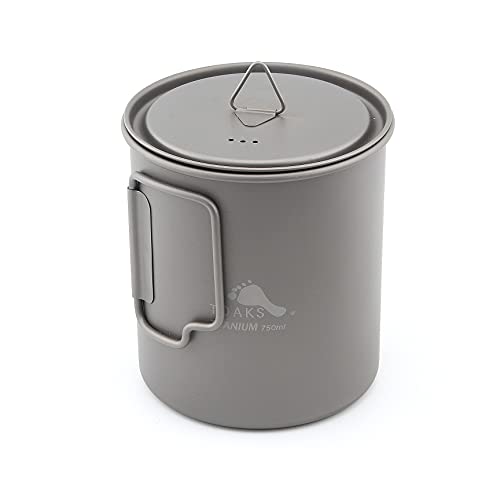
TOAKS Titanium 750ml Pot
750ml is the size that fits one freeze dried meal or two mugs of coffee, and titanium takes the abuse of a stove pushed into a pack for months.

TOAKS Titanium Long Handle Spork
The long handle reaches the bottom corner of a freeze dried pouch without coating your knuckles in stew. A small thing that you notice every single night.
Weights are the manufacturer's listed figures. Prices and stock change constantly, so confirm on the retailer page. We earn commissions from Backcountry and from qualifying Amazon purchases. Cottage gear sold direct earns us nothing and is listed anyway.
750ml is the size that fits one freeze dried meal or two mugs of coffee, which is why it is the default solo pot rather than an arbitrary number. Going bigger costs weight and buys nothing if you only ever boil water. Going smaller starts to boil over. If you are cooking for two, size up and buy the stove with the wider pot supports, because a tipped full pot at the end of a long day is worse than any weight penalty.
Who should not buy the expert pick
The SOTO WindMaster has a narrower but real disqualifier. At $69.95 it is buying you wind performance, and if your cooking happens in a tent vestibule, behind a boulder, or in the forest campsites of the eastern woodlands, you are paying for a problem you do not have. The PocketRocket 2 at $49.95 does everything else the WindMaster does for 0.4 oz less.
Going the other way, the BRS 3000T is genuinely the right answer for a lot of people, and its limits are specific rather than general. Use a pot under a litre, use a windscreen or a sheltered spot, and accept that the small pot supports mean you should never walk away from a full pot. At $16.89 it is also the least painful stove to discover you dislike.
Related reading
- Canister vs alcohol stove: weight, fuel availability and fire restrictions
- Food weight calculator: how many boils a trip actually needs
- Ultralight food planning: calories per ounce and the no-cook option
- Best ultralight gear under $100: where the cheap wins are
- Base weight calculator: fit the kitchen into the whole kit
- All gear reviews
Frequently asked questions
What is the best ultralight backpacking stove?
The MSR PocketRocket 2 at $49.95 and 2.6 oz is the best canister stove for most people. Its pot supports are wide enough that a full pot does not tip, and it simmers rather than only roaring, for under three ounces. The BRS 3000T at $16.89 and 0.9 oz is lighter and cheaper, and it gives up stability and wind performance to get there.
How much fuel do I need for a backpacking trip?
Plan on roughly 0.5 oz of isobutane per 2 cup boil. A 110 g canister holds about 3.9 oz of fuel, which is about seven to eight boils, so one canister covers roughly a four day trip at two boils a day. Cold weather, wind and melting snow all raise consumption sharply, so carry margin whenever the temperature is near or below freezing.
Should I compare stove weight or system weight?
System weight, meaning stove plus pot plus fuel. A 0.9 oz stove that needs a separate pot is not lighter than a 7.1 oz integrated system once you add the pot to it. The BRS 3000T with a TOAKS 750ml pot comes to 4.5 oz, the MSR PocketRocket 2 with the same pot comes to 6.2 oz, and the Jetboil Stash is 7.1 oz complete.
Do I need a windscreen for a canister stove?
A partial one helps a great deal, because wind is what wastes fuel on an exposed pitch. Never wrap a full windscreen tightly around an upright canister stove, because trapped heat can raise the canister temperature and pressure. Use a partial shield, position a rock or your pack upwind, or buy a stove like the SOTO WindMaster whose recessed burner is designed for the problem.
Is a titanium pot worth it over aluminium?
For boiling water, yes, because titanium takes months of being shoved into a pack without denting and the weight is low. For actual cooking it is worse, because titanium conducts heat unevenly and scorches food in hot spots. The TOAKS 750ml pot at 3.6 oz is the standard choice for a solo hiker who is boiling water for freeze dried meals and coffee.
Can I fly with a stove or fuel canister?
You can fly with the stove itself, though airlines may inspect a used one for fuel residue, and a scrubbed clean stove passes far more easily. You cannot fly with a fuel canister in either carry-on or checked baggage under any circumstance. Plan to buy fuel at your destination, which is a real constraint when the trailhead town has one outfitter.
How we choose: we compare published manufacturer specifications, listed weights, and verified owner reviews across retailers. We do not test gear in person, and every weight quoted here is the manufacturer's figure unless we say otherwise, so weigh your own kit before you trust a total. Going lighter also means carrying less margin, so treat insulation, navigation, water treatment and an emergency plan as fixed costs rather than places to save grams.