Osprey Exos 58 Review: Comfortable First, Light Second
Two point eight four pounds with an injection-moulded ladder giving four inches of torso adjustment, a ventilated suspended backpanel, two hipbelt pockets and a removable floating lid. Buy it if you want a pack that carries well and adjusts to fit rather than the absolute lightest option. At 2.84 lb it is a light pack rather than an ultralight one, and hikers chasing a sub-10 pound base weight will find a pound of it on the list.
Four inches of torso adjustment and a suspended mesh back, at 2.84 lb, which is not ultralight and is comfortable.
Osprey Exos 58L Men's Ultralight Backpacking Backpack, Gray, S/M
Under $500
A 58 litre backpacking pack with an adjustable Airspeed suspension, ventilated backpanel, hipbelt pockets and a removable floating lid.
Check price on AmazonSpecifications
| Capacity | 58 L |
|---|---|
| Weight | 2.84 lb |
| Dimensions | 30.3 in high by 14.6 in wide by 13 in deep |
| Suspension | Adjustable Airspeed, injection-moulded ladder with 4 in of torso adjustment |
| Backpanel | Strong mesh, ventilated |
| Hipbelt | Two hipbelt pockets |
| Hydration | Internal sleeve with a centre back hose port |
| Lid | Removable floating lid with top and under-lid zippered pockets |
Specifications above come from Osprey's published specifications. Treat pricing as approximate, since Amazon pricing moves.
What it does well
- Four inches of torso adjustment is the feature that matters most. A pack that fits your torso carries a load; a pack that does not transfers weight to your shoulders no matter how light it is.
- The suspended mesh backpanel keeps the pack off your back, which in hot weather is a genuine comfort difference that frameless packs cannot offer.
- A removable lid means you can strip weight when the trip is short, which is a rare and useful bit of flexibility.
- Hipbelt pockets on both sides is where snacks and a phone live, and a pack without them means stopping to take the pack off.
- Osprey's warranty and repair record is among the best in the industry, which matters on an item that gets abraded every day.
Where it falls short
- Two point eight four pounds is a light pack, not an ultralight one. Frameless and minimally framed packs sit around half that, and if you are chasing a base weight target this is a full pound of it.
- A suspension system is weight, and it only earns that weight if you are carrying enough load to need it. Under about twenty pounds, most hikers do not.
- Fifty eight litres encourages filling fifty eight litres. Pack volume is a strong predictor of pack weight, and a smaller pack is a form of discipline.
- Suspended mesh backpanels put the load further from your spine, which is comfortable in heat and slightly worse for stability on technical ground.
- Sizing is by torso length rather than by height and the S/M and L/XL split matters. Buying the wrong frame size undoes the whole point of the adjustment.
What owners report
The Exos has been the default recommendation for hikers moving from a traditional pack toward lightweight gear for years, and owner reports reflect that: it carries well, it ventilates, and it is heavier than what dedicated ultralight hikers use. Nobody reports it as uncomfortable, which is the compliment that matters for a pack.
Our Exos 58 versus Granite Gear Crown3 comparison is the direct head to head, and our frameless versus framed comparison is the more fundamental question. The rule that decides it is base weight: below about twenty pounds total, a frame stops earning its weight, and above that it earns it several times over.
Buy the pack last. Our buying order guide makes the point that pack size should follow from the volume of your gear, and our pack volume calculator and pack weight to body weight calculator give you the two numbers to size against.
Who it suits
- Hikers carrying more than about twenty pounds, where a frame earns its weight.
- Anyone whose torso length sits between standard sizes, where four inches of adjustment solves a real problem.
- Hot climates, where a ventilated suspended backpanel is worth carrying.
Who should skip it
- Hikers with a base weight low enough that a frameless pack would carry it.
- Anyone targeting a sub-10 pound base weight, where 2.84 lb is a large share of it.
- Short trips where 58 litres invites overpacking.
Alternatives worth considering
Granite Gear Crown3 60L Backpack, Regular Torso
Under $250
A removable framesheet drops the pack to 2 lb for ultralight setups, and an optional aluminium stay raises load capacity to 43 lb. Cheaper, and it adapts to your base weight rather than fixing one configuration.
Check price on AmazonTherm-a-Rest Vesper Quilt 32F/0C Down
Under $500
Pack weight follows from what goes in it. A 15 oz quilt that packs to 5 by 6 inches shrinks both the weight and the volume you need to carry, which is what lets you use a smaller, lighter pack in the first place.
Check price on AmazonTherm-a-Rest NeoAir XLite NXT Ultralight Sleeping Pad, Regular
Under $250
Thirteen ounces and rolls to the size of a one litre bottle. Sleep system bulk is the other thing that forces hikers into a larger pack than they need.
Check price on AmazonKeep reading
- Osprey Exos 58 vs Granite Gear Crown3
- Frameless vs framed pack
- Pack volume calculator
- Pack weight to body weight calculator
- How to pack a backpack
- First ultralight kit buying order
- Granite Gear Crown3 60L review
- Best ultralight backpacks
This review draws on published specifications, manufacturer figures and the consensus of verified owner reviews. We have not tested this product ourselves, and we say so rather than implying otherwise. As an Amazon Associate we earn from qualifying purchases.
Frequently asked questions
Is the Osprey Exos 58 actually ultralight?
It is a light pack rather than an ultralight one. At 2.84 lb it is roughly double what dedicated ultralight packs weigh, and it carries load far better than they do. Whether that trade is right depends entirely on your base weight, because a frame only earns its weight once there is load to transfer.
What size pack do I need?
Size the pack to your gear, not the other way round. Work out the packed volume of your sleep system, shelter, clothing and food, then choose a pack that fits it with a little margin. A pack larger than you need gets filled, which is the most reliable way to gain weight.
Frameless or framed pack?
Below about twenty pounds total load, most hikers are comfortable in a frameless pack and save a pound or more. Above that, a frame transfers weight to your hips and is worth carrying. Food and water are what push you over, so a pack that is fine on day five may not be on day one.
How do I get the fit right?
Measure your torso length rather than your height, and buy the frame size that matches. Then adjust the ladder so the hipbelt sits on top of your iliac crest with the shoulder straps wrapping without a gap. A pack that fits carries; a pack that does not will hurt regardless of how light it is.
Should I remove the lid?
On short trips, yes, if the pack closes properly without it. It is a few ounces and it is the sort of easy saving that adds up. Keep it for longer trips when the pack is full and the extra pockets are actually useful.
How we choose: we compare published manufacturer specifications, listed weights, and verified owner reviews across retailers. We do not test gear in person, and every weight quoted here is the manufacturer's figure unless we say otherwise, so weigh your own kit before you trust a total. Going lighter also means carrying less margin, so treat insulation, navigation, water treatment and an emergency plan as fixed costs rather than places to save grams.
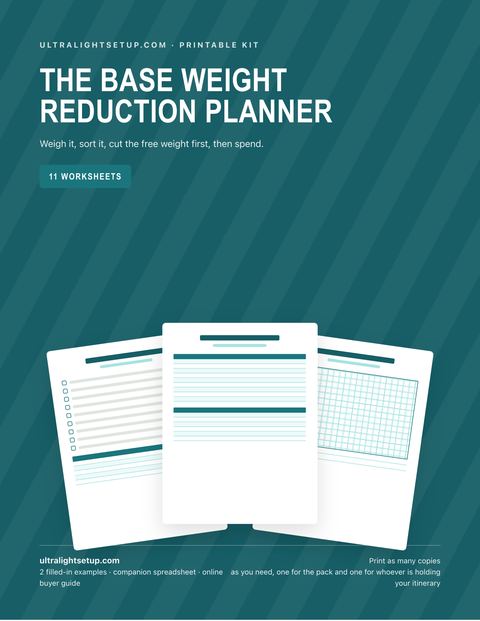
Weighing your own kit item by item? The Base Weight Reduction Planner is the paid version of these pages: 11 printable worksheets you fill in with your own numbers, two filled-in examples, a companion spreadsheet and the full PDF, $29.